Wednesday, September 9, 2009

"Letter To Me" by Braid Paisley


As a college student I often feel a little bit lost. Am I on the wrong path? Should I be taking these classes? Have I chosen the right friends?

Life is full of choices and consequences, and as a young person all of it can be overwhelming. It's a theme Brad Paisley captures in perfect context with the song "Letter To Me."

From the opening line about stashing X-Rated content away from my parents, to idea that love and relationships drive most of our young decisions, I connected with every word in Paisley's song. Teenage life is defined by parties, new experiences, and first dates with the cute girl we have a crush on.

Yet we are also burdened by hard classes, broken relationships and never ending fights with our parents. And when something doesn't go right, it can feel like the end of the world.

"I wish you wouldn't worry and let it be. Have a little faith and you will see."

Thinking at this age isn't logical and usually makes no sense at all. We crave responsibility and expect freedom to explore the world for the first time. These years are the most exciting and terrifying part of our lives. And Paisley proves that he gets it with his dead on lyrics and reassuring optimism.

"I know you're wondering if you'll survive the night. But trust me, you'll make it through this and see that you're still around to write this letter to me."

What makes these years so fun and exciting is also what holds us back from realizing our potential. At our age, it really is difficult to see past Friday night. We don't see the new relationships and memories waiting for us down the road. Our graduation and our wedding day. Our children and our grand children.

"You have so much up ahead. These are no where near the best years of your life."

As the song fades to a close, I am left feeling calm and optimistic. Even though in the back of my mind I know it's not possible, I feel like a future me has just phoned in for a friendly conversation.

He reassured me that everything will be ok. He encouraged me to have faith and enjoy what I have around me. He asked me to love the family and friends in my life. And he promised me that I'm still around to write this letter to me.

Thursday, September 3, 2009

Blog Post 2: Web 2.0 Video


The internet has changed everything. It has changed the way we think. The way we learn. The way we communicate. And the way we persuade others. And just as it has changed the world, the web itself is constantly evolving and mutating.

The Machine is Us/ing Us is a fascinating video taking us through some of the internet's biggest changes. And as we see right off the bat, there was a time when the internet was simple and boring. It's hard to imagine a web page without videos and pictures. I can't even remember what it was like to have to wait for a video to load.

Another thing I noticed about this video is that it moves very quickly. It's difficult to keep up with the speed at which it jumps through the chances. I believe this was done intentionally to make a point. Like the video, the web is evolving and changing so quickly that for a lot of people, it's hard to keep up.

The web hasn't just created change in itself. Through it's many tools of persuasion, the internet has quickly changed the world around us. All three of the methods of persuasion (ethos, pathos and logos) are deeply ingrained in the internet. It's one reason countries like China and Iran fear and try to control it. The web is full of ideas, opinions and beliefs, and the opportunity for everyone to discuss them.

Ethos can be seen in online integrity and responsibility. Many bloggers feel obligated to uphold moral values. Many considers themselves watchdogs of the world around them. And unlike a reporter for the New York Times or a correspondent with CNN, many do the work for free.

Online videos and photos appeal to pathos (our emotions). It's one thing to read a statistic about war casualties in Afghanistan. But to see the face of a crying child who just received the news that their father isn't coming home. That strikes home and can persuade millions.

Information exchange is also prevelant online. Facts can be gathered and collected in a matter of minutes through a few simple searches on Google. And with the internet, anyone can upload a video or photo to the world to show their side of the story. Logos was key in showing the world what was happening in Iran.

This is just a sample of the millions of ways that people change the world using the internet everyday. People are thinking in new ways. They are learning new things. They are communicating with each other. Exchanging ideas and sharing information.

The internet is persuasion. And persuasion is changing the world.

Blog Post 1: Quotation on Writing

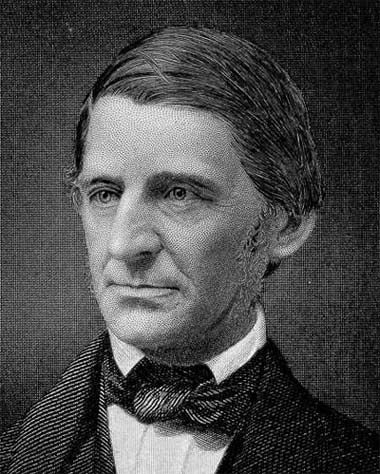
"The reality is more excellent than the report." - Ralph Waldo Emerson

As a writer, your goal is to make your audience feel like they are experiencing your story firsthand. You want to make them feel like they are with you, climbing Mount Everest in freezing temperatures as snow blinds your field of vision. Or jumping with you as you fall out of an airplane 10,000 feet in the air on your first skydiving attempt.

Writing does face unique challenges that other story telling mediums do not. You don't have tools such as video or sound to tell your story.

But you also have some advantages. Done correctly, the written word can capture the imagination of an audience in ways television and radio can only dream of. Only a writer can take you inside the mind of the character. To show you first hand the thoughts, emotions and details that make reality so excellent.

When Barack Obama was elected as the first African American President of the United States, the entire world was watching. His speech was on every news station in the country. His face could be seen in photographs published in every newspaper in the world. We heard his words and saw the emotion he chose to display on his face.

But only Barack Obama knows what it was really like. Only he can describe the feelings, the struggles and the triumphs of a long campaign ending in success. And while Obama will be interviewed and written about for many years to come, his autobiography might give us insight what it was like to be Barack Obama.

That is the power of writing. And while the reality is always more excellent than the report, as a writer you can come pretty close to proving this statement false.

Tuesday, September 1, 2009